


As a supplier of AR Glasses Rigid - flex PCB, I've witnessed firsthand the critical role that surface finish plays in the performance of these advanced printed circuit boards. In this blog, I'll delve into how the surface finish of AR Glasses Rigid - flex PCB affects its performance, drawing on industry knowledge and our own experiences.
The Basics of Surface Finish in Rigid - flex PCBs
Surface finish is the final treatment applied to the exposed copper pads on a PCB. Its primary purpose is to protect the copper from oxidation and corrosion while also providing a suitable surface for soldering components. For AR Glasses Rigid - flex PCBs, which are used in high - tech, compact, and often high - performance devices, the choice of surface finish can have far - reaching implications.
There are several common types of surface finishes used in the PCB industry, each with its own characteristics. Some of the popular ones include HASL (Hot Air Solder Leveling), ENIG (Electroless Nickel Immersion Gold), OSP (Organic Solderability Preservative), and Immersion Silver.
Impact on Electrical Performance
One of the most significant ways surface finish affects the performance of AR Glasses Rigid - flex PCBs is in terms of electrical conductivity. The surface finish can either enhance or impede the flow of electrical current. For example, ENIG provides a very smooth and uniform surface, which allows for excellent electrical contact between the PCB and the components. This is crucial in AR glasses, where high - speed data transmission and low signal loss are essential for clear visual displays and responsive user interactions.
On the other hand, a poor - quality surface finish like a rough HASL can introduce additional resistance in the electrical path. This resistance can lead to signal degradation, which may result in issues such as flickering displays, delayed response times, or even complete system failures. In the context of AR glasses, where the user experience is highly dependent on seamless and accurate visual and interactive functions, any electrical performance degradation can be a deal - breaker.
Impact on Mechanical Performance
The mechanical performance of AR Glasses Rigid - flex PCBs is also closely related to the surface finish. Rigid - flex PCBs are designed to be flexible, allowing for unique form factors in AR glasses. The surface finish can affect the adhesion between the components and the PCB, as well as the overall durability of the board.

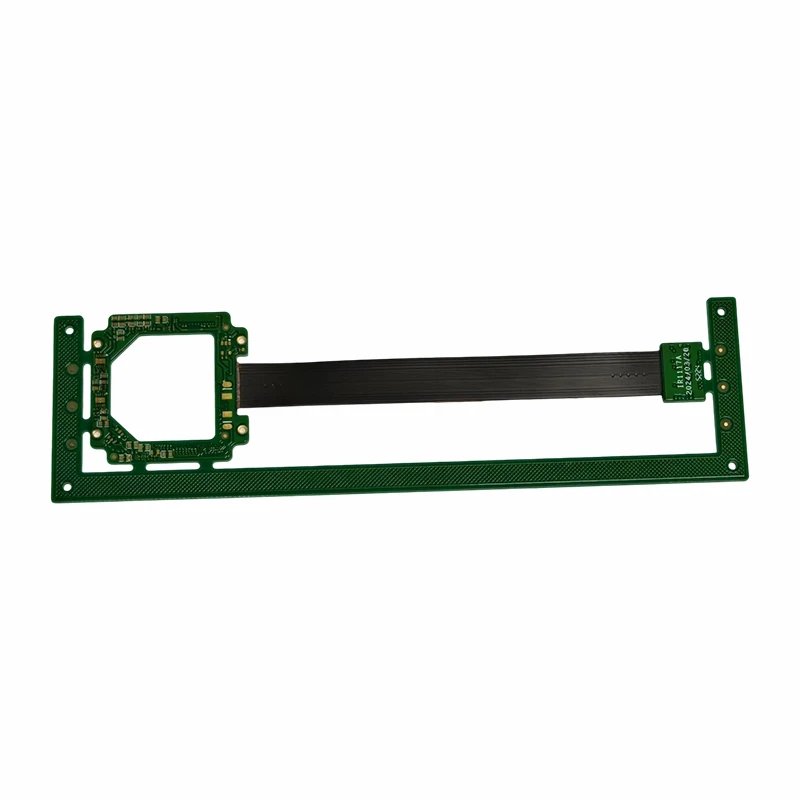
ENIG has good solderability and provides strong adhesion between the components and the PCB. This is important because AR glasses are often subject to movement and vibrations during normal use. A strong bond ensures that the components stay in place and do not come loose, which could lead to malfunctions.
In contrast, OSP, while it is a cost - effective option, may not provide the same level of mechanical strength. Over time, the organic coating can wear off, especially in a high - stress environment, potentially leading to component detachment. This is a significant concern for AR glasses, which need to be reliable and long - lasting.
Impact on Chemical Resistance
AR Glasses Rigid - flex PCBs are exposed to various chemicals during the manufacturing process, as well as in the end - user environment. The surface finish can provide a protective barrier against these chemicals, preventing corrosion and damage to the copper traces.
Immersion Silver has good chemical resistance, which makes it suitable for AR glasses that may be exposed to moisture or other environmental contaminants. It forms a thin layer of silver on the copper surface, which acts as a shield against oxidation and chemical attack.
However, if a surface finish with poor chemical resistance is used, the copper traces can corrode over time. This corrosion can lead to open circuits, short circuits, or other electrical problems, ultimately reducing the lifespan and reliability of the AR glasses.
Impact on Manufacturing Process
The choice of surface finish also affects the manufacturing process of AR Glasses Rigid - flex PCBs. Different surface finishes require different processing steps and conditions. For example, ENIG involves a multi - step chemical plating process, which requires careful control of the plating parameters to ensure a high - quality finish.
HASL, on the other hand, is a relatively simple process that involves dipping the PCB into a molten solder bath and then using hot air to level the solder. While this process is cost - effective, it may not be suitable for high - density AR Glasses Rigid - flex PCBs, as the uneven surface created by HASL can make it difficult to place small components accurately.
Case Studies
Let's look at some real - world examples to illustrate the impact of surface finish on AR Glasses Rigid - flex PCB performance.
A customer once approached us with a problem of frequent display glitches in their AR glasses. After a thorough analysis, we found that the surface finish on their Rigid - flex PCBs was a rough HASL. The roughness was causing signal interference and poor electrical contact between the display module and the PCB. We recommended switching to ENIG, which provided a smoother surface and better electrical conductivity. After the change, the display glitches were significantly reduced, and the overall performance of the AR glasses improved.
Another case involved a customer who was looking for a more cost - effective solution for their AR glasses. They initially chose OSP as the surface finish. However, after a few months of use, they started to notice component detachment issues, especially in areas where the PCB was bent. We advised them to consider Immersion Silver, which provided better mechanical adhesion and chemical resistance. The new surface finish resolved the component detachment problem and extended the lifespan of the AR glasses.
Conclusion
In conclusion, the surface finish of AR Glasses Rigid - flex PCBs has a profound impact on their performance in terms of electrical conductivity, mechanical strength, chemical resistance, and manufacturing process. As a supplier of AR Glasses Rigid - flex PCB, we understand the importance of choosing the right surface finish for each application.
We also offer a wide range of other Rigid - flex PCBs, such as Automatic Lawn Mower RF and RF for Display Module, with carefully selected surface finishes to meet the specific requirements of different industries.
If you are in the market for high - quality AR Glasses Rigid - flex PCBs or other Rigid - flex PCB products, we invite you to contact us for a detailed discussion. Our team of experts is ready to help you choose the best surface finish and PCB solution for your needs.
References
- IPC - 4552A, "Specification for Electroless Nickel/Immersion Gold (ENIG) Plating for Printed Boards"
- IPC - 4556, "Specification for Immersion Silver Coating for Printed Boards"
- IPC - 4555, "Specification for Organic Solderability Preservatives (OSP) for Printed Boards"
- IPC - 4553, "Specification for Immersion Tin Coating for Printed Boards"


