


The choice between a rigid-flex PCB and a standard flexible board sounds like a technical specification question, but this is really a product architecture decision that cascades into manufacturing cost, assembly complexity, and long-term serviceability. We have seen engineering teams spend weeks optimizing a design only to realize mid-way through NPI that a rigid-flex hybrid would have simplified their connector problem entirely. At CSNT-EMS in Dongguan, we regularly help teams work through this trade-off before they commit to a particular approach.
Understanding the Fundamental Difference
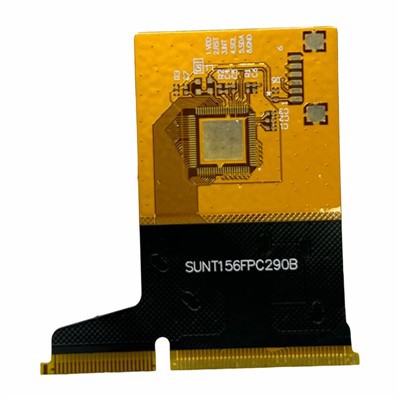
A standard flexible printed circuit (FPC) uses polyimide (PI) film dielectric that can conform to a package shape during installation or in end-use service. A rigid-flex PCB combines these bending sections with rigid sections (typically FR4) in a single integrated structure. The rigid sections provide mounting surfaces for components and connectors. The bending sections provide the dynamic or static flexing capability.
The structural difference drives the manufacturing process difference. A pure-bending design is produced entirely using polyimide and copper materials. A rigid-flex requires sequential lamination where polyimide layers are bonded to rigid layers under controlled temperature and pressure. This makes rigid-flex more expensive per square centimeter than a pure-bending design.
When a Standard Flexible Board Alone Is the Right Choice
Pure-bending FPC designs make sense when the entire board needs to conform to a package shape, when the form factor requires the board to fold into a compact package, or when the board will experience repeated dynamic bending in service.
Single-sided designs are the lowest-cost option for simple applications like LED strip connectors or single-axis applications. Double-sided designs support more complex routing but require plated through-holes, which adds process cost.
The main limitation of pure-bending FPC designs is component mounting. You cannot surface mount components on pure polyimide because the material does not provide adequate mechanical support for reflow soldering or for components that experience mechanical stress during service. Components must be mounted on rigid sections or on stiffeners bonded to the polyimide area.
When Rigid-Flex Makes More Sense
Rigid-flex PCBs excel in three specific situations.
First, when your product requires surface mount components on a rigid-flex PCB in areas that do not flex. The rigid FR4 sections provide the mechanical support needed for reliable reflow soldering and component attachment.
Second, when your FPC design needs to reduce connector count. Rather than using separate connectors to link a rigid board to a bending section, a rigid-flex PCB integrates the connection internally, which reduces impedance discontinuities and saves board space.
Third, when your rigid-flex FPC will undergo repeated dynamic bending and needs to interface with rigid board sections. Examples include foldable displays, lidar modules with articulated sections, and aerospace payloads with deployment mechanisms.
A medical device manufacturer we worked with had originally specified a separate rigid PCB connected via a 0.5mm pin header. Switching to a two-layer rigid-flex design eliminated the connector, reduced the assembly footprint by 18 percent, and improved signal integrity at the interface.
Rigid-flex vs separate rigid+FPC assembly comparison

Material and Process Cost Differences
Material costs for pure-bending designs run higher than rigid FR4 because polyimide film and flexible copper clad laminate (FCCL) are higher-priced materials. Panasonic R-F777 PI FCCL and Taiflex FHK0515 coverlay are common specifications that reflect this premium.
Rigid-flex adds the cost of sequential lamination, which requires more process steps and longer cycle times than standard rigid PCB fabrication. The number of polyimide layers, the number of rigid layers, and the complexity of the transition zones all drive cost.
For a rough cost comparison, a four-layer rigid-flex PCB typically costs 40 to 80 percent more than an equivalent four-layer rigid PCB with a separate two-layer interconnect. The exact premium depends on layer count, board area, and geometry.
Making the Decision for Your Application
For rigid-flex FPC designs, start with the component placement constraint. If all components can sit on rigid sections and the bending requirement is limited to a few defined areas, a pure-bending design with a separate rigid interconnection may be the lowest-cost path. If components must be placed in multiple planes or if the routing between rigid sections requires high-density interconnect, rigid-flex usually wins on total system cost even though the board itself costs more.
Stackup complexity is another factor. Rigid-flex requires careful management of the tolerance stack through lamination. Working with a fabricator early in the design phase helps identify potential issues before they become production blockers.
Rigid-flex PCB stackup cross-section showing flex-to-rigid transition zones
Reach out to our engineering team for a complimentary RFQ review. We provide stackup recommendations, material cost estimates, and a side-by-side comparison of pure-bending versus rigid-flex approaches for your specific geometry. Get a Free Rigid-Flex PCB Quote from CSNT-EMS to discuss your specific application requirements.
Email your requirements to info@csnt-ems.com or use our contact form.


